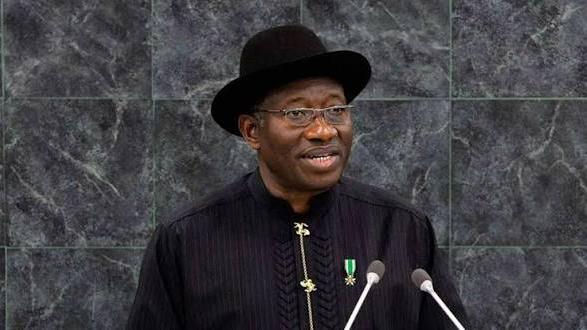
Former President Goodluck Jonathan on Tuesday warned that political actors are increasingly unwilling to accommodate opposing views and that campaign teams are being run like cult groups.
He spoke in Abuja at a peace and security conference organised by the Goodluck Jonathan Foundation.
Premium Times gave the theme as“Safeguarding Peace and Strengthening Social Cohesion in a Competitive Political Environment," while the News Agency of Nigeria, in a report carried by NewsDiaryOnline, wrote “Safeguarding Trust” and called it the Third National Peace and Awareness Conference.
“Cult groups are always rivals; you see the other cult group as an enemy, so you must attack, kill and maim," Jonathan said, according to NAN. “That is not politics. We must not manage our political systems as cult groups." He said young people are being recruited into violence, and cautioned against the “deliberate encouragement of ethnic rivalry,” adding that nothing could be more dangerous to national existence. He also said every Nigerian may contest elections, from councillorship to the presidency, regardless of affiliation.
On the courts, Jonathan raised concern about conflicting rulings by courts of coordinate jurisdiction and about politicians seeking favourable courts in electoral disputes. He said this could push citizens toward self-help, with “very disastrous” results. He called on the National Judicial Council to investigate conflicting decisions, urged traditional and religious leaders to reject political excesses, and asked parties to reform recruitment so that competence counts for more than ethnic or religious considerations.
Other speakers added context. Omar Touray, a former president of the ECOWAS Commission, delivered the keynote and said Nigeria’s 2027 elections will matter beyond its borders, Premium Times reported. Former Vice President Namadi Sambo said competition should not come at the cost of national unity. The foundation’s executive director, Ann Iyonu, cited a 2026 Afrobarometer survey, released on November 11, which she said found fewer than four in 10 Nigerians expect credible 2027 elections, with vote buying, political violence and inaccurate result declarations the most commonly anticipated problems. The survey itself was not reviewed for this report.